
Washroom Hygiene Tips Every Business Should Follow

Washroom hygiene is no longer just a basic facility management task. For modern businesses, it has become an important part of employee well-being, customer experience, workplace safety, and brand reputation. Whether it is an office, shopping mall, school, hospital, hotel, restaurant, manufacturing unit, or commercial building, a clean and well-maintained washroom creates a strong impression about how seriously the business values hygiene and user comfort.
According to the Centers for Disease Control and Prevention, proper handwashing can prevent around 30% of diarrhoea-related sicknesses and around 20% of respiratory infections. This clearly shows how important hygiene practices are in reducing the spread of germs and common illnesses. In a workplace environment, where many people use the same facilities every day, poor washroom hygiene can quickly become a health risk.
Businesses today are investing in commercial hygiene solutions to create safer, cleaner, and more efficient washroom environments. From touch-free soap dispensers and automatic hand dryers to smart monitoring systems and high-quality cleaning products, the right hygiene approach can make a major difference.
This blog covers the most important restroom hygiene tips, bathroom hygiene tips, office washroom hygiene tips, and workplace washroom hygiene tips that every business should implement.
Why Washroom Hygiene is Important for Businesses
✯ Protects Employee Health
The first and most important reason to maintain washroom hygiene is employee health. In offices and commercial spaces, employees share doors, taps, toilet handles, soap dispensers, and hand drying facilities. These touchpoints can easily carry germs if they are not cleaned and sanitised regularly.
A poorly maintained washroom can increase the risk of infections, stomach illnesses, respiratory issues, and general discomfort. When employees fall sick frequently, it affects attendance, team productivity, and overall business operations.
Good hygiene also supports mental comfort. No employee wants to use a dirty or smelly washroom during working hours. A fresh, clean, and well-equipped washroom creates a more positive workplace environment.
✯ Creates a Positive Customer Experience
Washrooms are often silent brand ambassadors. Customers may not always comment on a clean washroom, but they will definitely remember an unhygienic one. For restaurants, hotels, retail stores, hospitals, corporate offices, and service-based businesses, washroom cleanliness directly affects customer perception.
A hygienic washroom helps build trust. For example, if a customer visits a restaurant and finds the restroom dirty, they may start questioning the cleanliness of the kitchen as well. Similarly, if a client visits a corporate office and finds poor washroom maintenance, it may create doubts about the company’s internal standards.
A clean and well-maintained washroom enhances brand image. It communicates care, discipline, and responsibility. This is especially important for businesses that welcome clients, customers, vendors, patients, students, or guests regularly.
✯ Supports Regulatory Compliance
Businesses also need to follow health and safety standards. Depending on the industry, location, and type of facility, there may be specific hygiene, sanitation, waste disposal, and workplace safety requirements. Failing to maintain washroom hygiene can lead to complaints, inspections, penalties, or legal issues.
Commercial washrooms must have basic hygiene facilities such as clean toilets, handwashing stations, soap, drying options, waste bins, ventilation, and regular cleaning systems. Businesses should also maintain cleaning records and inspection checklists where required.
Regulatory compliance is not only about avoiding penalties. It also protects the organisation from employee grievances, customer complaints, and health-related concerns. A business that maintains proper hygiene standards is better prepared for audits and inspections.
Also Read : How to Choose the Best Hand Dryer for Office Use
How Technology is Improving Washroom Hygiene
➥ Technology has changed the way businesses manage washroom hygiene. Earlier, washroom maintenance depended heavily on manual cleaning routines and user complaints. Today, modern hygiene equipment and smart systems make it easier to maintain cleaner, safer, and more efficient washrooms.
✯ Touchless Technology
Touchless technology has become one of the most effective ways to improve washroom hygiene. Since many germs spread through frequently touched surfaces, reducing contact points can significantly improve cleanliness.
Sensor-operated faucets are now commonly used in commercial washrooms. They allow users to wash their hands without touching tap handles. This reduces water wastage and prevents germs from spreading from one user to another.
Touch-free hand dryers are also useful in busy washrooms. They allow users to dry their hands without touching any surface. Compared to shared cloth towels or poorly managed paper towels, automatic hand dryers can offer a more hygienic and convenient experience when selected and maintained properly.
✯ Smart Monitoring Systems
Smart washroom monitoring systems are becoming popular in large commercial facilities. These systems help facility managers track washroom conditions in real time and respond faster to maintenance needs.
Cleaning schedule alerts help ensure that cleaning staff follow proper routines. Instead of depending only on fixed schedules, businesses can use data-based cleaning plans. For example, a washroom with higher footfall can be cleaned more frequently than a low-traffic one.
Real-time maintenance notifications are also useful. If a dispenser stops working, a bin is full, or a fixture needs attention, the system can alert the maintenance team. This reduces delays and improves the user experience.
✯ Benefits for Businesses
Technology improves hygiene compliance by making washroom maintenance more systematic. Automated systems reduce manual errors and help businesses maintain consistent standards.
Choosing the right Washroom accessories supplier can help businesses install durable, user-friendly, and easy-to-maintain products. From sensor taps to dispensers and dryers, quality accessories can improve both hygiene and appearance.
Most importantly, technology enhances user experience. Employees, customers, and visitors prefer washrooms that are clean, modern, odour-free, and easy to use. Smart hygiene solutions help businesses deliver that experience consistently.
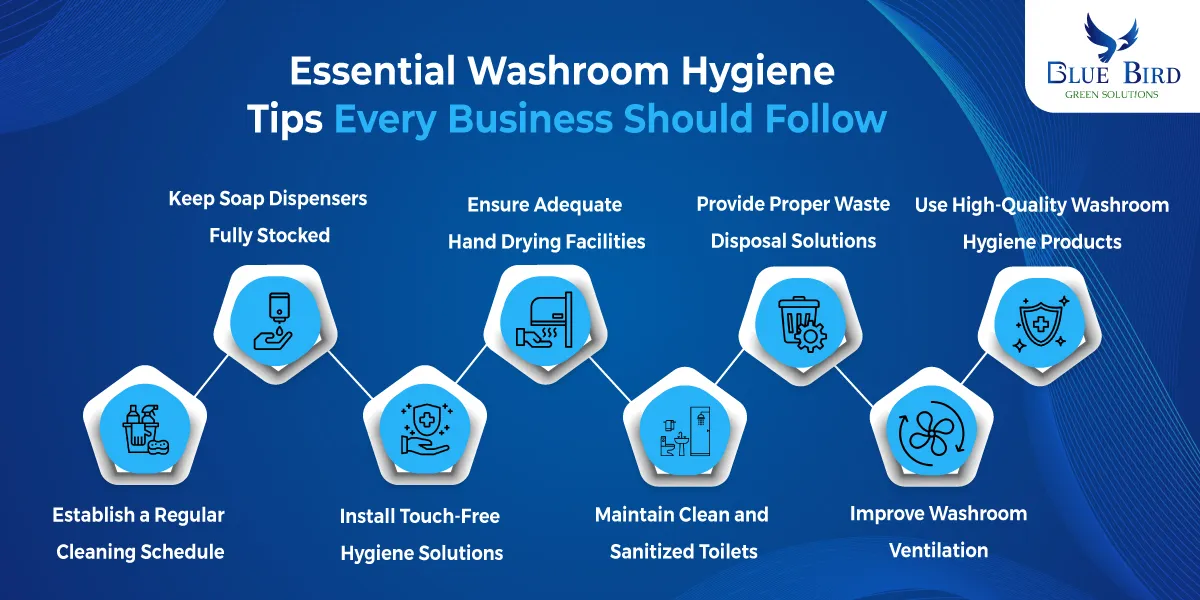
Essential Washroom Hygiene Tips Every Business Should Follow
1. Establish a Regular Cleaning Schedule
➥ A regular cleaning schedule is the foundation of washroom hygiene. Without a proper schedule, even the best hygiene products and equipment will not deliver the desired results. Washrooms with high footfall need frequent cleaning throughout the day, while smaller offices may require cleaning at fixed intervals.
● Best Practices
Businesses should create daily cleaning routines that include toilet cleaning, floor mopping, mirror cleaning, sink sanitisation, dustbin checks, and odour control. Cleaning should not be limited to visible dirt. High-touch surfaces such as door handles, flush buttons, faucet areas, soap dispensers, and hand dryers should also be disinfected regularly.
Deep cleaning should be done weekly or as per usage levels. This includes scrubbing tiles, cleaning corners, removing stains, checking drainage, and sanitising hard-to-reach areas.
Cleaning checklists are extremely useful. They help ensure that no task is missed. Staff can sign or update the checklist after every cleaning round, making the process more accountable.
● Benefits
A proper cleaning schedule ensures consistent cleanliness. It reduces the chances of bad odour, stains, bacterial buildup, and user complaints. It also helps facility managers identify problems early.
Regular cleaning reduces contamination risks. When surfaces are cleaned and disinfected frequently, the chances of germs spreading from one user to another become lower.
2. Keep Soap Dispensers Fully Stocked
➥ Soap is one of the most basic yet important washroom hygiene products. If soap dispensers are empty, users may skip proper handwashing, which increases hygiene risks.
● Why It Matters
Keeping soap dispensers fully stocked encourages proper handwashing. After using the washroom, users need easy access to soap and water. If soap is unavailable, the entire hygiene process becomes incomplete.
Empty soap dispensers create hygiene gaps. They also show poor facility management and can lead to complaints from employees or visitors. In workplaces, this can affect employee confidence in the organisation’s hygiene standards.
● Recommended Solutions
Automatic soap dispensers are ideal for commercial washrooms because they reduce physical contact and provide controlled soap dispensing. They also give the washroom a cleaner and more modern appearance.
Refillable dispensers are another practical option, especially for offices and small businesses. They are cost-effective and easy to maintain. However, they must be checked regularly to ensure they do not run empty.
Businesses should also choose good-quality liquid soap that is gentle on the skin and effective for regular use. Harsh or poor-quality soap can discourage users from washing their hands properly.
3. Install Touch-Free Hygiene Solutions
➥ Touch-free hygiene solutions are one of the best ways to reduce cross-contamination in commercial washrooms. These solutions limit the need to touch common surfaces.
● Examples
Automatic faucets allow users to wash their hands without touching handles. This reduces germ transfer and also saves water by stopping the flow automatically.
Sensor-based soap dispensers provide soap without contact. They are especially useful in offices, malls, hospitals, restaurants, airports, and other high-traffic facilities.
Automatic hand dryers provide touch-free drying after handwashing. They help complete the hand hygiene process and reduce dependency on paper towels.
● Benefits
The biggest benefit of touch-free hygiene solutions is reduced cross-contamination. When users do not need to touch taps, dispensers, or dryers, the risk of transferring germs decreases.
These solutions also improve user convenience. People prefer washrooms that are quick, clean, and easy to use. Touch-free systems make the overall experience smoother and more hygienic.
For businesses, these systems also create a modern image. They show that the organisation is serious about hygiene, comfort, and facility quality.
4. Ensure Adequate Hand Drying Facilities
● Available Options
Automatic hand dryers are a popular choice for commercial washrooms. They are touch-free, easy to use, and reduce the need for paper towel waste. Modern hand dryers are designed for faster drying and better energy efficiency.
A reliable hygiene product supplier can help businesses choose suitable hand drying solutions based on footfall, washroom size, energy consumption, noise level, and maintenance needs.
Paper towel dispensers are also used in many facilities. They are simple and effective, but businesses must manage refilling, disposal, and waste collection properly.
● Key Advantages
Proper hand drying supports better hand hygiene. It completes the handwashing process and reduces the chance of moisture-related germ transfer.
It also reduces moisture-related bacterial growth in the washroom. When users leave with wet hands or drip water around sinks and floors, the area can become messy and slippery. Good drying facilities help maintain cleanliness and safety.
5. Maintain Clean and Sanitized Toilets
● Focus Areas
Toilet seats must be cleaned and disinfected frequently, especially in high-traffic washrooms. They should be checked for stains, damage, and unpleasant odour.
Flush handles or flush buttons are high-touch points and must be sanitised regularly. In touch-free flushing systems, sensors should be checked to ensure they are working properly.
Door handles, locks, and partitions should not be ignored. These are touched by almost every user and can carry germs if not disinfected.
● Recommended Practices
Frequent disinfection should be part of the daily cleaning routine. Businesses should use appropriate disinfectants that are effective and safe for commercial washroom surfaces.
Effective cleaning products should be selected based on the type of surface, level of usage, and hygiene requirements. Staff should also be trained to use the right dilution and cleaning method.
Toilets should be inspected multiple times a day in busy workplaces. Any blockage, leakage, stain, or odour issue should be resolved immediately.
6. Provide Proper Waste Disposal Solutions
● Essential Requirements
Covered waste bins should be placed in suitable areas of the washroom. Open bins can spread odour and make the washroom look untidy.
Sanitary disposal units are essential in women’s washrooms. They provide a safe, respectful, and hygienic way to dispose of sanitary waste.
Regular waste removal is necessary to prevent overflowing bins. Cleaning staff should check bins during every cleaning round and replace liners as required.
● Benefits
Proper waste disposal helps with odour control. It keeps the washroom fresh and prevents waste-related smells from spreading.
It also improves overall cleanliness. Users are more likely to keep the washroom clean when proper disposal options are available.
For businesses, good waste management reduces complaints and supports a more professional environment.
7. Improve Washroom Ventilation
● Why Ventilation Matters
Good ventilation reduces unpleasant odours. It helps remove stale air and keeps the washroom fresh for users.
Ventilation also controls humidity levels. Excess moisture can make floors slippery and create conditions for mold and mildew growth.
Poor ventilation can lead to mold growth on walls, ceilings, tiles, and corners. This affects both hygiene and appearance.
● Suggested Solutions
Exhaust fans are a basic but effective solution for improving airflow. They should be cleaned and maintained regularly to work properly.
Air circulation systems may be required in larger commercial washrooms. These systems help maintain better air quality, especially in facilities with high footfall.
Businesses can also use air fresheners, but they should not be used as a replacement for cleaning or ventilation. Fresh fragrance works best when the washroom is already clean.
8. Use High-Quality Washroom Hygiene Products
● Recommended Products
Liquid hand soap should be gentle, effective, and suitable for frequent use. It should be placed near every handwashing station.
Surface disinfectants should be effective against common germs and safe for regular use on washroom surfaces.
Tissue paper should be soft, durable, and easy to dispense. Poor-quality tissue can create waste and user dissatisfaction.
Automatic hand dryers should be selected based on drying speed, energy efficiency, hygiene features, and durability.
Air fresheners can help maintain a pleasant washroom environment, especially when combined with proper cleaning and ventilation.
● Benefits
High-quality products deliver better hygiene outcomes. They clean more effectively, last longer, and improve the overall washroom experience.
They also enhance user satisfaction. Employees and visitors appreciate washrooms that are well-stocked, fresh, and comfortable to use.
Businesses should work with a trusted supplier to ensure consistent availability of hygiene products, accessories, and maintenance support.
Also Read : Types of Tissue Paper Dispenser That Enhance Washroom Experience
Common Washroom Hygiene Mistakes Businesses Should Avoid
✯ Neglecting Regular Cleaning
One of the biggest mistakes is irregular cleaning. Some businesses clean washrooms only once a day or only when complaints arise. This approach does not work in busy commercial environments.
Neglecting regular cleaning leads to bacterial buildup. Surfaces, toilets, sinks, and floors can become contaminated quickly when used by many people.
Businesses looking for top commercial washroom solutions should focus not only on products but also on cleaning systems, staff training, and maintenance planning.
✯ Running Out of Hygiene Supplies
Another common mistake is failing to refill hygiene supplies on time. Empty soap dispensers, missing tissue paper, non-functional dryers, and overflowing bins create a poor user experience.
This impacts user confidence. Employees and visitors may feel that the business does not care about hygiene.
It also reduces compliance with hygiene practices. If soap, water, or drying options are unavailable, users cannot follow proper hand hygiene even if they want to.
Supply checks should be part of every cleaning round. Smart dispensers and monitoring systems can also help prevent this issue.
✯ Ignoring Maintenance Issues
Maintenance problems can quickly turn into hygiene problems. Leaking taps, broken dispensers, blocked drains, faulty flush systems, and poor ventilation should never be ignored.
Leaking fixtures create water wastage and wet floors. This increases the risk of slips and makes the washroom look poorly maintained.
Broken dispensers prevent users from accessing soap, sanitiser, or tissue paper. This affects hygiene compliance.
Poor ventilation systems lead to odour, humidity, and mold-related issues. Regular inspection and timely repairs are necessary to keep washrooms safe and pleasant.
Benefits of Maintaining Excellent Washroom Hygiene
✯ Healthier Workplace Environment
Clean washrooms reduce the spread of germs and support a healthier workplace. Employees are less exposed to contaminated surfaces, bad odour, and unhygienic conditions.
A healthier workplace helps improve attendance and overall team performance. It also shows that the business values employee safety and well-being.
✯ Improved Employee Satisfaction
Employees notice the quality of workplace facilities. Clean and well-maintained washrooms make them feel respected and comfortable.
Good washroom hygiene also reduces frustration. Employees do not have to deal with empty supplies, dirty toilets, or unpleasant smells during working hours.
This contributes to a better workplace experience and can support employee retention indirectly.
✯ Enhanced Customer Confidence
Customers and visitors often judge a business by its washroom standards. A clean washroom creates a positive impression and builds confidence.
For customer-facing businesses, washroom hygiene can influence repeat visits, reviews, and brand perception. A well-maintained washroom shows professionalism and care.
✯ Reduced Sick Leave
Good hygiene practices can help reduce the spread of common illnesses. When employees have access to clean toilets, soap, hand drying facilities, and sanitised surfaces, the risk of infection spread becomes lower.
Reduced sick leave means fewer disruptions, better productivity, and smoother daily operations.
✯ Stronger Business Reputation
Reputation is built through every customer and employee interaction, including washroom experience. A clean washroom supports a positive brand image.
Businesses that maintain high hygiene standards are seen as more responsible, organised, and customer-focused. This can be especially valuable in competitive industries.
Ready to Transform Your Workplace Hygiene Standards?
Washroom hygiene should be treated as a business priority, not just a maintenance task. Clean and well-equipped washrooms protect employee health, improve customer confidence, support compliance, and strengthen brand reputation.
Working with a reliable Hygiene equipment supplier can help businesses choose the right products, accessories, and systems for their washroom needs. From automatic soap dispensers and hand dryers to waste bins, cleaning products, and smart monitoring systems, the right equipment can make hygiene management easier and more effective.
Make washroom hygiene a business priority. Consistent hygiene efforts contribute to a positive workplace experience, healthier employees, happier visitors, and a stronger brand image. A clean washroom may seem like a small detail, but for your business, it can make a lasting impression.

Shyaemal R Thakore
Founder at Blue Bird Green Solutions. I help businesses maintain high hygiene standards with reliable and effective cleaning solutions.


