

Touchless Soap Dispenser vs Manual Soap Dispenser: Which One is Better?

Hygiene has become one of the most important parts of modern washroom planning. Whether it is a home, office, hospital, hotel, restaurant, school, mall, or public washroom, people now expect clean, safe, and easy-to-use hygiene solutions. A soap dispenser may look like a small washroom accessory, but it plays a big role in daily hand hygiene.
According to the CDC, proper handwashing can prevent around 30% of diarrhoea-related sicknesses and around 20% of respiratory infections. WHO also reports that hand hygiene improvement programmes can prevent up to 50% of avoidable infections acquired during healthcare delivery. These numbers clearly show why better hand hygiene systems matter in every shared space.
Today, many people compare touchless soap dispensers and manual soap dispensers before choosing the right option. A manual dispenser works with a push or press system, while a touchless soap dispenser uses sensor technology to release soap without hand contact. This is one reason why many businesses now prefer buying from a trusted soap dispenser supplier that offers modern, durable, and hygienic washroom solutions.
Touchless soap dispensers are becoming a better choice for homes, offices, hospitals, hotels, and commercial spaces because they reduce touchpoints, improve user experience, and support cleaner washroom management.
What is a Touchless Soap Dispenser?
A touchless soap dispenser is an automatic soap dispensing unit that releases soap when it detects hand movement. Users do not need to press, pump, or touch the dispenser. They simply place their hand below the sensor, and the dispenser gives the right amount of soap.
This makes the touchless soap dispenser a smart choice for places where many people use the same washroom every day. It supports better hygiene, reduces direct hand contact, and gives the washroom a more modern look.
Touchless dispensers are available in different models, including countertop, wall-mounted, battery-operated, and commercial units. For offices, hospitals, restaurants, malls, and public washrooms, a commercial touchless soap dispenser is usually the better option because it is designed for frequent use.
• How Touchless Soap Dispensers Work
Touchless soap dispensers use motion sensor technology. When a person places their hand near the sensor, the dispenser automatically releases soap. The user does not need to press any button or touch the body of the dispenser.
This system reduces hand contact while washing hands. In shared washrooms, many people touch the same surfaces. A touchless hand soap dispenser helps reduce one common touchpoint and makes the handwashing process cleaner.
It also helps maintain better hygiene in shared washrooms because the dispenser body remains cleaner for a longer time. This is useful in offices, clinics, hotels, restaurants, schools, and other high-traffic places.
• Key Features of Touchless Soap Dispensers
The main feature of a touchless dispenser is contact-free operation. This means users can wash their hands without touching the dispenser. It improves hygiene and gives users more confidence.
Another useful feature is controlled soap dispensing. The dispenser releases a fixed amount of soap, which helps reduce wastage. In commercial spaces, this can support better refill management and reduce unnecessary soap usage.
Touchless dispensers also have a modern and hygienic design. A wall mounted touchless soap dispenser can save space and keep the washroom counter clean. Many businesses prefer this type of model because it looks neat and works well in high-traffic washrooms.
These dispensers are suitable for high-traffic spaces because they are convenient, quick to use, and more hygienic than traditional pump-based options.
What is a Manual Soap Dispenser?
A manual soap dispenser is a basic soap dispensing unit that requires users to press, push, or pump the dispenser to release soap. It is one of the most common options used in homes, small offices, and low-traffic washrooms.
Manual dispensers are simple, affordable, and easy to refill. They do not need batteries, sensors, or electricity. This makes them useful for places where budget is the main priority.
However, the biggest concern with manual dispensers is touch. Since every user has to press the pump or button, the dispenser surface can become a common contact point. In shared washrooms, this may not be the most hygienic option.
• How Manual Soap Dispensers Work
Manual soap dispensers work through a simple press or push system. The user presses the pump or lever, and the dispenser releases soap.
These dispensers work without battery or electricity. This makes them easy to use and easy to maintain. They are commonly used in homes, small washrooms, and areas with limited footfall.
Many people still prefer manual dispensers because they are budget-friendly and familiar. However, for commercial and shared washrooms, businesses should compare hygiene, maintenance, and user experience before choosing.
• Key Features of Manual Soap Dispensers
Manual dispensers are simple to use. Users know how they work, and no technical setup is required. They are also budget-friendly, especially for small homes or low-traffic spaces.
They are easy to refill and usually have a basic soap dispensing system. A good hand soap dispenser supplier can provide both manual and automatic options based on the washroom requirement.
However, manual dispensers need regular cleaning because users touch them frequently. In public or commercial washrooms, this can create extra cleaning work for facility teams.
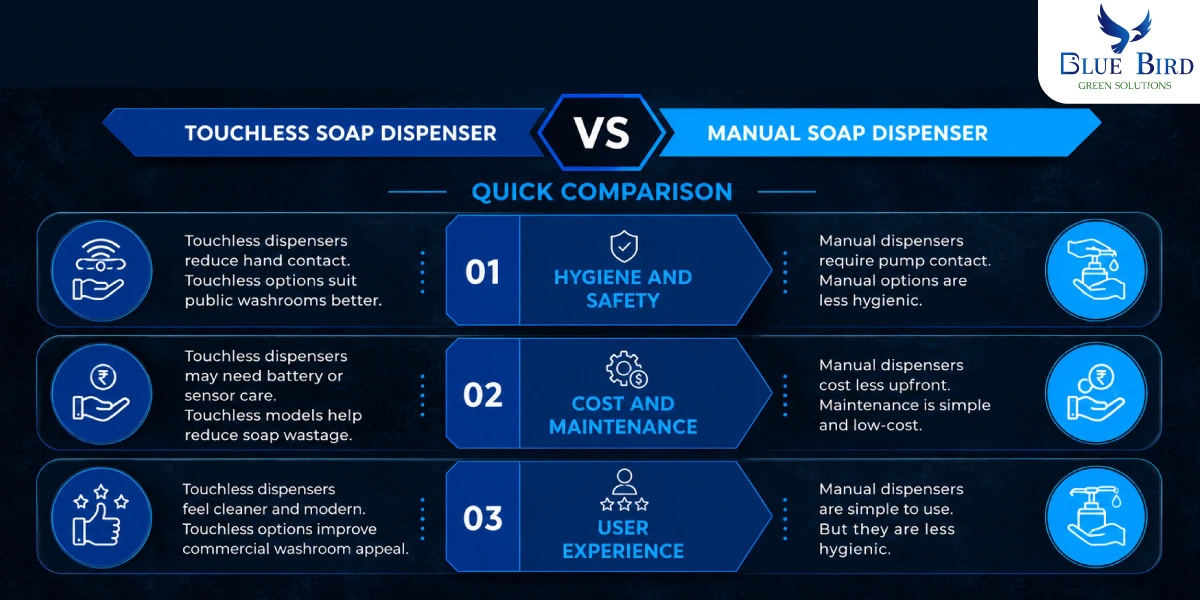
Touchless Soap Dispenser vs Manual Soap Dispenser: Quick Comparison
Both touchless and manual soap dispensers have their own use cases. The better choice depends on hygiene needs, budget, washroom traffic, and user expectations.
For modern washrooms, touchless dispensers clearly offer better hygiene and a better user experience. Manual dispensers can still be used in small, low-traffic areas, but they may not be suitable for commercial spaces where many users visit daily.
• Hygiene and Safety
Touchless dispensers reduce direct hand contact. Since users do not press the dispenser, the chances of surface contact are lower. This makes a touchless bathroom soap dispenser a good option for shared washrooms.
Manual dispensers require users to touch the pump or button. This can become a concern in public places where many people use the same dispenser throughout the day.
Touchless options are better for shared and public washrooms because they support contact-free hygiene. This is especially useful in hospitals, clinics, offices, hotels, restaurants, schools, and malls.
• Cost and Maintenance
Manual dispensers usually have a lower upfront cost. They are simple and do not require sensors or batteries. For small homes or very low-traffic washrooms, they can be a practical option.
Touchless dispensers may need battery replacement or sensor maintenance. However, they can reduce soap wastage because they dispense a fixed amount of soap every time. In high-traffic spaces, this controlled dispensing can be helpful for long-term washroom management.
A business looking for bulk installation may also connect with an automatic soap dispenser wholesaler to get suitable models for multiple washrooms.
• User Experience
Touchless dispensers offer a cleaner and more modern experience. Users simply place their hand below the dispenser and get soap without touching anything.
Manual dispensers are simple but less hygienic in shared areas. They may also look basic in modern commercial washrooms.
Touchless dispensers create a better impression in commercial spaces. A clean and modern washroom can improve how customers, employees, guests, and visitors feel about the place.
Also Read : Best Soap Dispenser Supplier in Gujarat for Hotels, Offices, and Hospitals
Why Touchless Soap Dispensers Are Better for Modern Washrooms
Modern washrooms need more than basic functionality. They need to be clean, safe, easy to use, and well managed. This is why many homes, offices, hotels, restaurants, hospitals, and malls are upgrading to touchless dispensers.
A bathroom touchless soap dispenser helps improve hygiene without making the process complicated. It is simple for users and useful for facility managers.
• Better Hygiene Control
Touchless dispensers reduce touchpoints in washrooms. Users do not need to touch the dispenser body, pump, or button. This helps lower the risk of germ transfer through common surfaces.
This is very important in high-traffic and shared spaces. In offices, hospitals, malls, schools, and restaurants, hundreds of people may use the same washroom every day. A touchless system can make hygiene management easier.
For businesses, better hygiene control also supports brand image. Customers and employees notice when a washroom is clean and well equipped.
• Controlled Soap Usage
A touchless dispenser releases a fixed amount of soap. This helps reduce unnecessary soap wastage. In manual dispensers, users may press the pump multiple times or release more soap than needed.
Controlled soap usage supports better refill planning. Facility teams can manage stock more easily and avoid sudden shortages.
This is especially useful in commercial washrooms where refill cost and maintenance time matter. Over time, controlled dispensing can make washroom operations more efficient.
• Professional Washroom Appearance
A touchless dispenser gives washrooms a clean and premium look. It shows that the space is maintained properly and that hygiene is taken seriously.
This improves customer and employee experience. In hotels, restaurants, offices, hospitals, and malls, washroom quality directly affects user perception.
A modern dispenser also supports better washroom design. Wall-mounted models save counter space, look organised, and are easy to access.
Benefits of Choosing a Touchless Soap Dispenser Service
Choosing the right product is important, but choosing the right service provider is equally important. A good supplier helps you select, install, refill, and maintain the dispenser based on your washroom needs.
Whether you need one unit for a small washroom or multiple dispensers for a commercial property, expert support can save time and prevent mistakes.
• Right Product Selection
A proper service provider helps choose the right dispenser for your space. Every washroom is different. A small office washroom may need a different model compared to a hospital, school, mall, or hotel.
Professional guidance supports wall-mounted, automatic, and commercial dispenser needs. It also ensures better hygiene planning for washrooms.
For example, high-traffic areas may need larger-capacity dispensers, while compact washrooms may need space-saving models. The right selection improves both usability and maintenance.
• Easy Installation Support
Professional setup saves time and effort. A dispenser should be placed at the right height and location so users can access it comfortably.
A wall mounted soap dispenser is a good option when you want to save counter space and keep the washroom neat. Proper placement also reduces water splashes, crowding, and user confusion.
Installation support reduces installation-related issues. It also ensures that the dispenser is fixed safely and works correctly from the beginning.
• Refill and Maintenance Convenience
Regular maintenance keeps dispensers working smoothly. Touchless dispensers may need battery checks, sensor cleaning, and timely refills.
Timely refills help avoid empty dispensers. An empty soap dispenser creates a poor user experience and weakens hygiene standards.
Sensor and battery checks improve long-term performance. With proper maintenance, touchless dispensers can work reliably in daily-use washrooms.
Where Touchless Soap Dispensers Are Best Used
➥ Touchless dispensers can be used in many places, but they are especially useful in high-traffic and hygiene-sensitive areas. Any place where many people use the same washroom can benefit from contact-free soap dispensing.
• Offices and Corporate Spaces
In offices, touchless dispensers support employee hygiene. Employees use washrooms multiple times during the day, so a clean and easy-to-use system makes a difference.
They also improve washroom standards. A professional washroom setup shows that the organisation cares about workplace hygiene.
For corporate spaces, the best touchless soap dispenser is one that is durable, easy to refill, and suitable for daily use.
• Hospitals and Clinics
Hospitals and clinics need strict hygiene practices. Touchless dispensers help reduce touchpoints and support safer handwashing.
They are suitable for patient, staff, and visitor areas. In healthcare spaces, every hygiene improvement can support a cleaner environment.
A reliable commercial dispenser is a smart option for such locations because it can handle frequent use and maintain consistent performance.
• Hotels and Restaurants
Hotels and restaurants focus strongly on guest experience. A clean washroom with a modern dispenser gives visitors a better impression.
Touchless dispensers also support food safety and hygiene expectations. In restaurants, cafes, and food service areas, hand hygiene is very important for staff and customers.
A stylish touchless dispenser can give the washroom a premium feel and match the overall look of the property.
• Malls, Schools, and Public Washrooms
Malls, schools, and public washrooms have high footfall. Many people use the same facilities every day, so reducing surface contact is helpful.
Touchless dispensers are ideal for these areas because they are quick, convenient, and hygienic. They also help maintain cleaner washrooms by reducing soap spills and overuse.
For public washrooms, choosing a durable model is important because the dispenser must handle continuous use.
Which Soap Dispenser Should You Choose?
If hygiene, convenience, and modern washroom experience matter, a touchless soap dispenser is the better choice. It is ideal for homes, offices, hospitals, hotels, restaurants, and public washrooms.
Manual dispensers can work for low-traffic spaces, but they require hand contact. In shared washrooms, this is not always the best option.
A touchless system gives users a cleaner experience and helps facility teams manage soap usage better. It also makes the washroom look more professional and well planned.
• Choose a Touchless Soap Dispenser If:
Choose a touchless dispenser if you want to reduce touchpoints and improve hygiene. It is a smart choice for any space where multiple users share the same washroom.
It is also the right option if you manage a high-traffic or commercial washroom. Offices, hotels, hospitals, restaurants, schools, malls, and public spaces can benefit from touchless technology.
You should also choose it if you want controlled soap dispensing with less wastage. A touchless model gives a fixed amount of soap and supports better refill planning.
It is the better option if you prefer a modern and professional washroom setup.
• When Can a Manual Soap Dispenser Be Considered?
A manual soap dispenser can be considered for small homes or low-traffic areas. If very few people use the washroom, a manual dispenser may be enough.
It is also suitable when budget is the main priority. Manual dispensers are usually cheaper than automatic models.
However, manual dispensers need regular cleaning because users touch them frequently. If cleaning is not done properly, the pump area can become dirty.
• Why Touchless Soap Dispensers Are the Better Choice
Touchless soap dispensers help reduce germ transfer through contact-free use. They make handwashing easier, cleaner, and more comfortable.
They offer a better user experience because there is no need to press or touch anything. This makes them suitable for children, elderly users, customers, employees, and visitors.
They also give washrooms a modern and hygienic appearance. For commercial and public spaces, this is a smarter option because it supports hygiene, design, and maintenance together.
Also Read : Automatic Soap Dispenser Benefits: The Complete Guide for Businesses
How to Choose the Right Touchless Soap Dispenser Service Provider
Choosing the right provider is important if you want long-term value. A good provider will not only sell the dispenser but also help with product selection, installation, refill planning, and maintenance support.
Businesses should avoid choosing only based on price. Product quality, service support, sensor performance, and durability are equally important.
• Check Product Quality
Choose durable and reliable dispensers. A low-quality dispenser may stop working, leak soap, or create sensor issues.
Look for good sensor performance. The sensor should detect hands quickly and dispense soap smoothly.
Select models suitable for daily use. For commercial spaces, choose stronger models that can handle regular footfall.
• Look for Installation and Support
Prefer a provider that offers installation assistance. Correct installation improves usability and reduces future problems.
Check if maintenance support is available. This is important for offices, hotels, hospitals, restaurants, and other places where dispensers must work every day.
Also ensure quick service for repairs or replacements. Delayed service can affect hygiene standards and user experience.
• Consider Bulk and Commercial Needs
Choose a provider that supports offices, hotels, hospitals, and public spaces. Bulk requirements need proper planning, suitable models, and timely supply.
Ask about refill options and long-term service plans. This helps you manage washroom hygiene without regular operational stress.
Select solutions based on washroom traffic and usage. A small washroom and a high-footfall washroom will not need the same type of dispenser.
Choose a Smarter Hygiene Solution for Your Space
Upgrading to a touchless soap dispenser is a simple but powerful step towards better hygiene. It reduces hand contact, supports cleaner washrooms, and gives users a more modern experience.
Choose the right dispenser based on your washroom traffic, space, and usage needs. For small spaces, a compact automatic model may work well. For commercial properties, a stronger and larger-capacity dispenser may be better.
Get professional support for product selection, installation, refills, and maintenance. Working with a reliable automatic soap dispenser wholesaler or supplier can help you choose the right solution for your home, office, hospital, hotel, restaurant, mall, school, or public washroom.
In the comparison between touchless and manual soap dispensers, touchless dispensers clearly offer better hygiene, better user experience, controlled soap usage, and a cleaner washroom appearance. Manual dispensers may still be useful in small and low-traffic areas, but for modern washrooms, touchless is the smarter choice.

Shyaemal R Thakore
Founder at Blue Bird Green Solutions. I help businesses maintain high hygiene standards with reliable and effective cleaning solutions.


